Cutting of telescope mirror with biscuit cutter
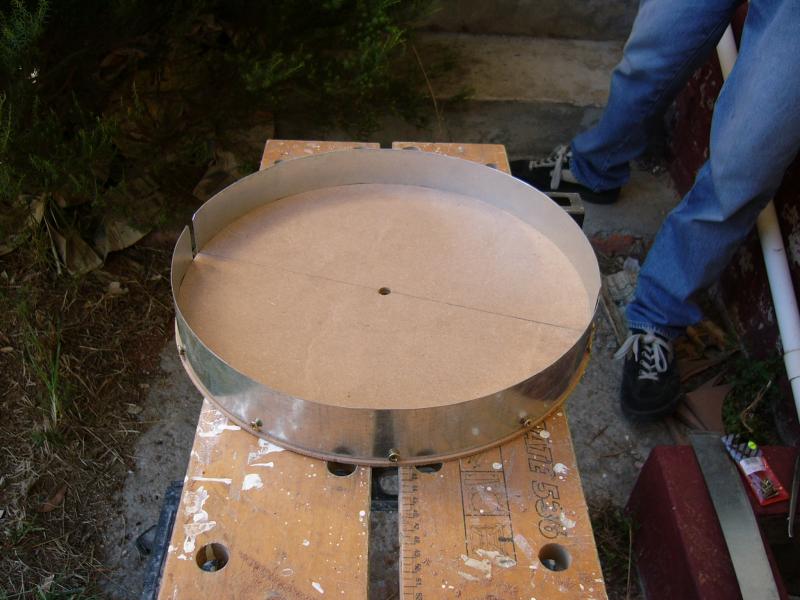
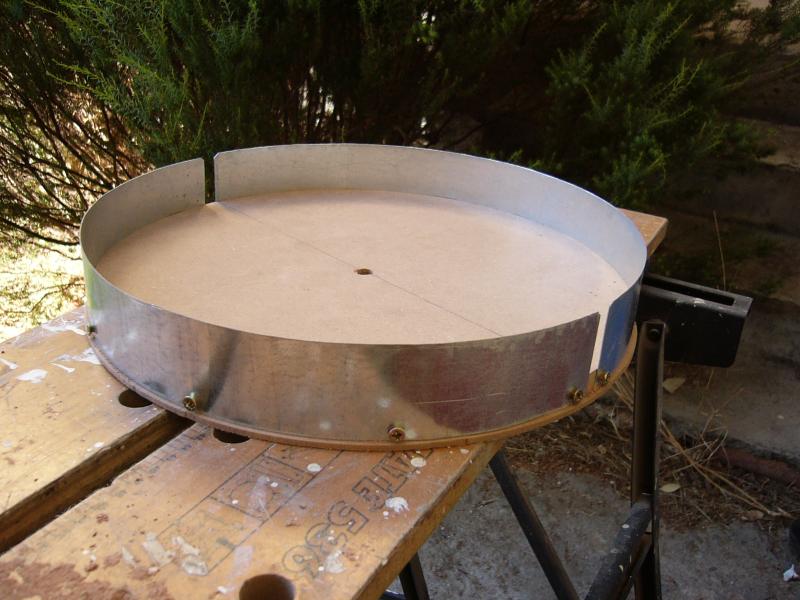
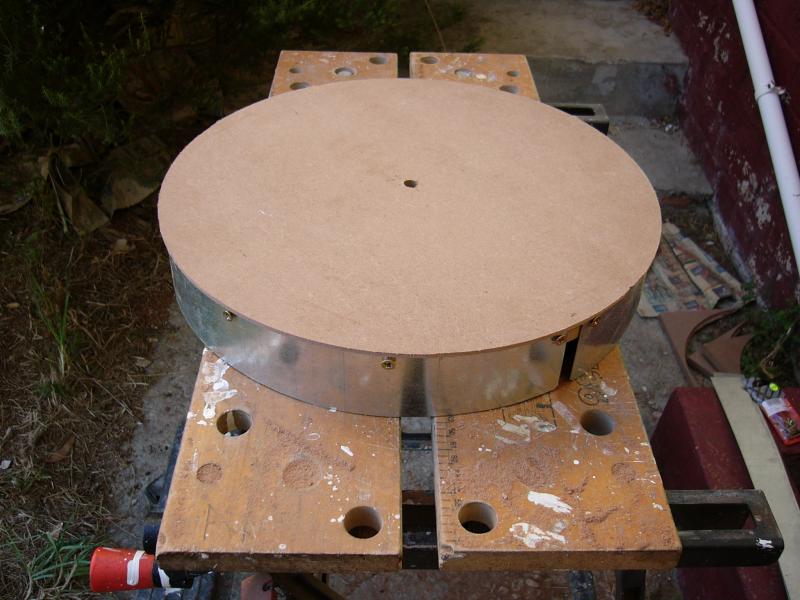
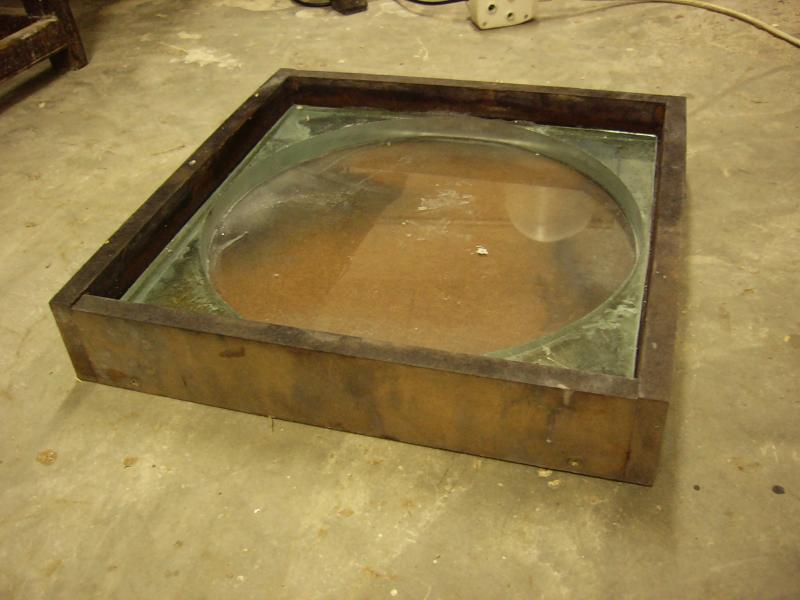
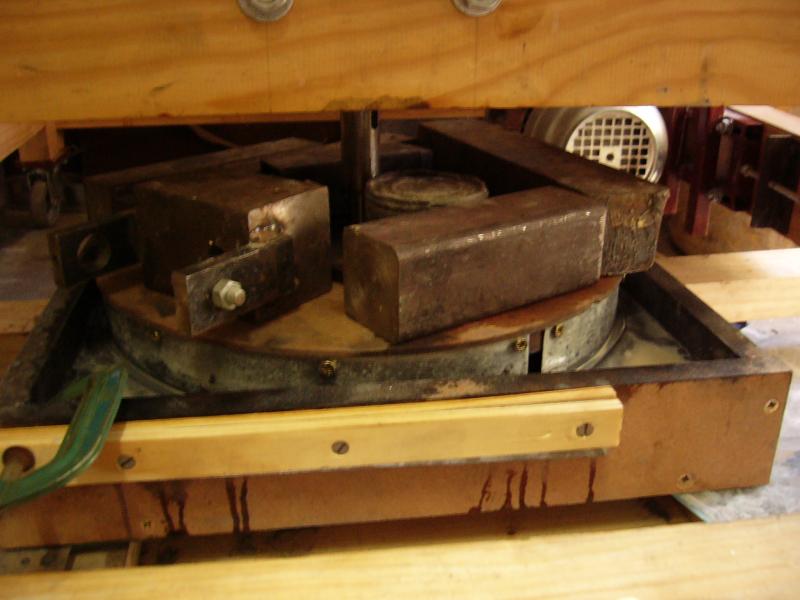
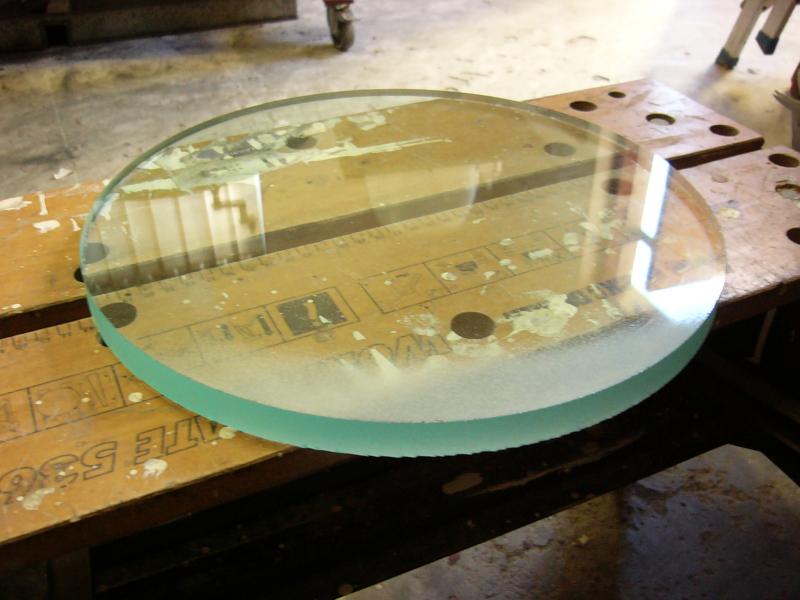
One can cut your own telescope mirror with a biscuit cutter. Below is photos of the biscuit cutter and process used to cut the mirror for a friend. The cutter was made to cut a mirror from a 350 mm square piece of 19 mm plate glass. About 7 mm was allowed on the sides to prevent the cutter from cutting through the sides. The cutter sides was made from 1.6 mm zinc plate cut to a width of 50 mm. Since the plate will grind away one has to allow for it. Teeth was cut into the cutter's edge. In order to prevent chipping of the mirror edges a piece of 350 mm square of 4 mm plate glass was placed on both sides of the mirror glass. A box was made to keep the grinding powder and water inside and to hold the glass. Click on the thumbnails below for a bigger picture.
 |
 |
 |
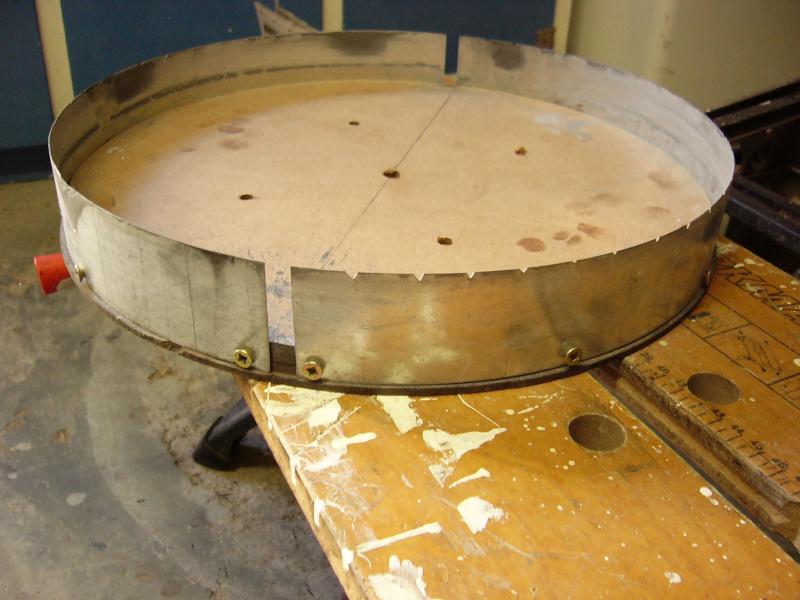 |
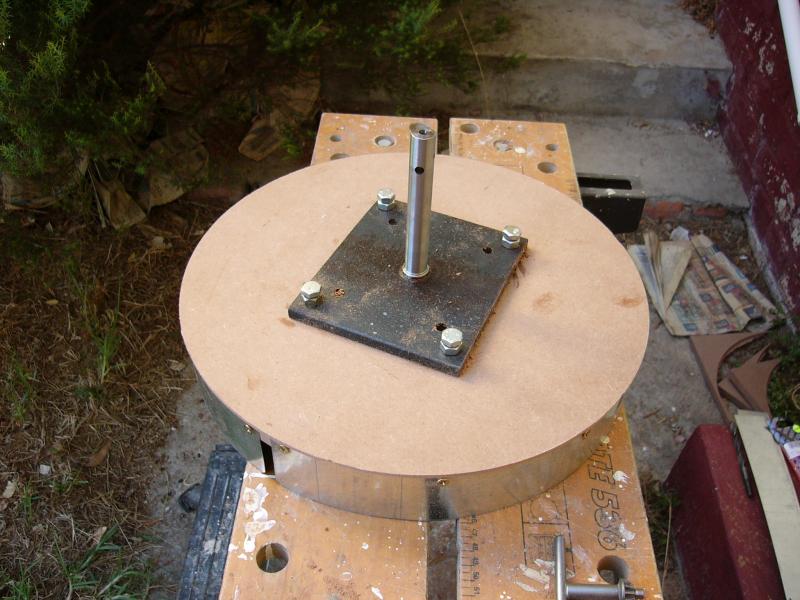
| The cutter seen from below. | The cutter seen from the side.The disk was cut with a router. The one side was cut a bit bigger so that a narrow ridge is formed against which holds the plate straight when it is screwed to the disk. | The cutter seen from the top. The hole in the middle of the disk is 10 mm into which the router attachment fits. | Teeth should be cut into the cutter edge. The picture shows the teeth remaining after the mirror was cut. |
 |
 |
 |
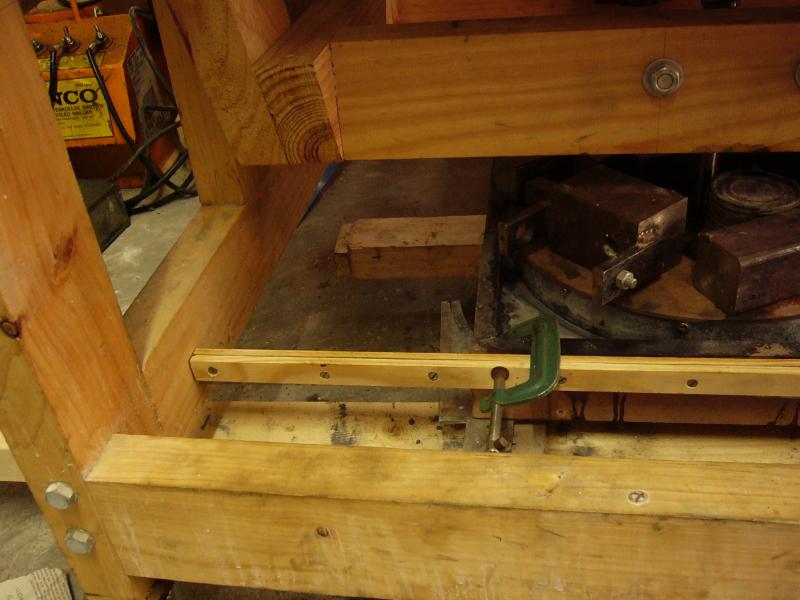 |
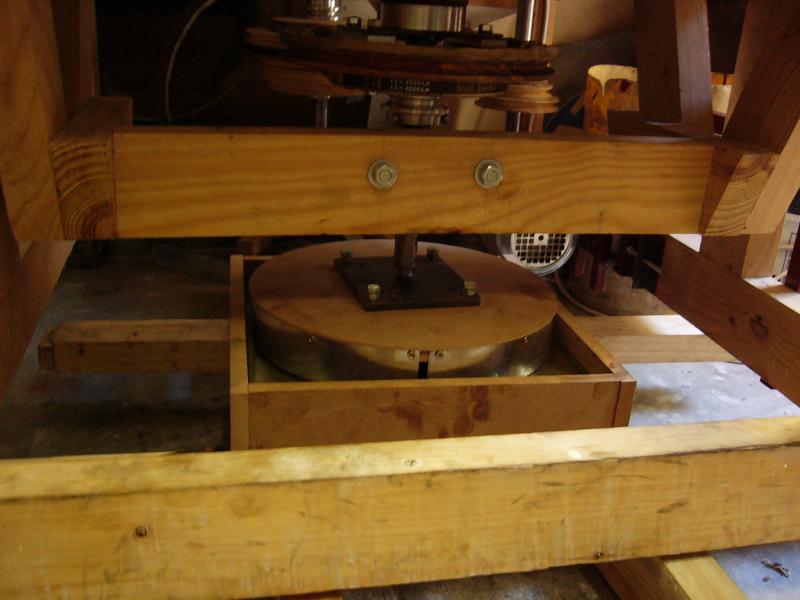
| The cutter with the machine coupling bolted to it. The top of the coupling has a 10 mm pin which fits into the hole in order to centre the coupling. | A box to hold the glas together should be made. Seal the joints so that they are watertight. The photo was taken after the mirror was cut. | The cutter fitted to the underside of the machine. The box containing the glass was placed on top of planks to lift it high enough. It is very important that the glass is set square with the axis of the cutter otherwise the cut will be out of square. One way of doing it is to make a mark on the cutter edge. Measure the distance at that point to the glass at 4 equidistant points by turning the cutter. Adjust the box until all 4 distances are the same. | Clamp a piece of wood to one edge of the box to prevent the box from turning. |
 |
 |
 |
Problems with the method
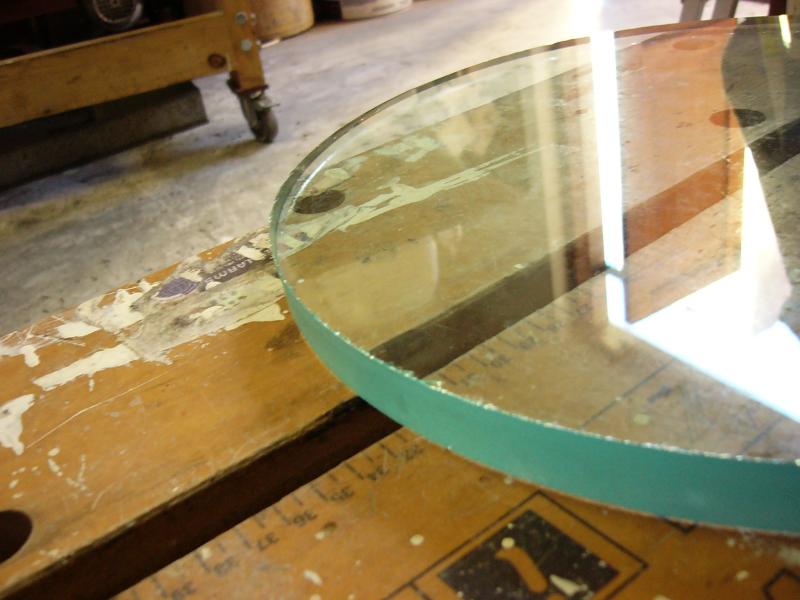
About 3 mm of the plate was ground away. A problem with this type of cutter is that the top is smaller than the bottom since the top is longer in contact with the cutter and cutting powder. For instance the mirror in the photos above was 1 mm larger at the bottom than the top. To prevent it the bottom inside of the cutter should be thicker than the rest. It is however difficult to make such a cutter especially in the larger size cutters.